


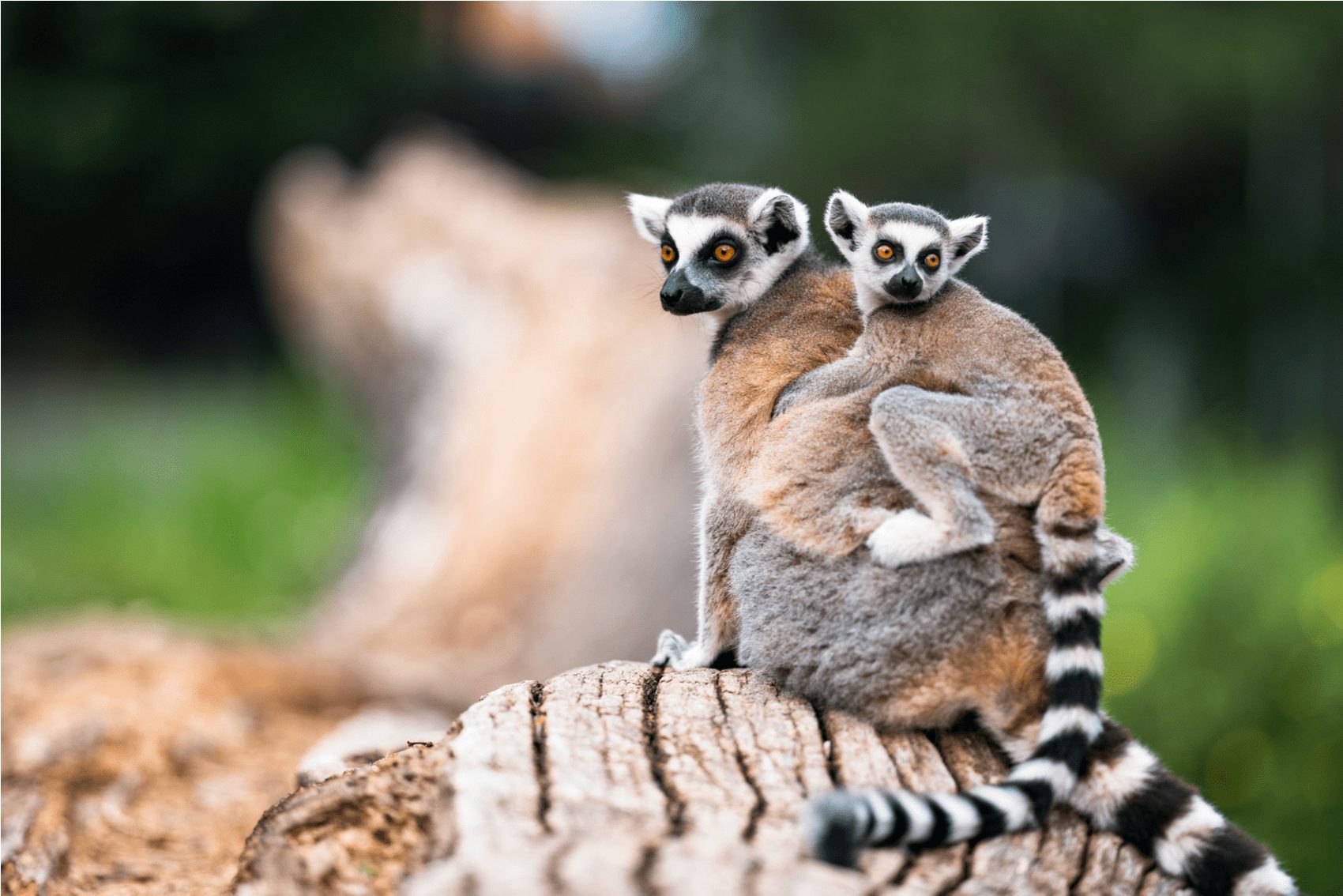

Adventure awaits in the Andohahela National Park, where visitors can get up close and personal with its extensive collection of fascinating plants and animals.
A Quick Rundown
Stretching for about 760 square kilometers along the southern region of the Malagasy Highlands, the Andohahela National Park is renowned as the biggest lemur sanctuary in all of Madagascar.
This reserve is generally classified as a humid rainforest and has been a protected area since 1939. It was eventually recognized as a national park in 1998, and became a World Heritage Site not long after.
Most of the reserve’s expanse is inhabited by the members of the Antanosy and Antandroy tribes. Scientists have recorded 15 lemur species actively living in the Andohahela National Park, including the:
- White sifaka (Propithecus verreauxi)
- Ring-tailed lemur (Lemur catta)
Additionally, there are several species of amphibians, birds and reptiles — most of them rare and only endemic to Madagascar — that are also thriving in the area. Apart from its captivating array of plants and animals, the park is also known for its unique terrains and landscapes.
These significantly differ, depending on which part of the reserve you are exploring. This reserve features three distinctive areas in its premises, particularly a transitional forest, a spiny forest as well as a rainforest, all of which are teeming with biodiversity.
The climates in these areas also vary throughout the year. For this reason, Andohahela National Park is becoming one of the top destinations for nature lovers and hiking enthusiasts looking to take adventure to a new level these days is its accessibility.
The park is located just 40 kilometers away from Tôlanaro’s north-western region, but there are also several accommodation options available near the reserve to suit your needs.
Highlights You Shouldn’t Miss
Pic de Andohahela
Pic de Andohahela, or the summit of Andohahela, is the last stop of the Malio Circuit, and one of the trails you can explore in the Andohahela National Park.
With an overall height of 1,956 meters, the summit is not just an awesome vantage point to get a bird’s eye view of the reserve, but also a convenient spot to catch a glimpse of the Fleurete’s sportive lemur (Lepilemur fleuretae), the Southern lesser bamboo lemur (Hapalemur meridionalis) and the Collared brown lemur (Eulemur collaris).
The mysterious Aye-aye (Daubentonia madagascariensis) can also be occasionally spotted in the area during the late afternoon and early evening either resting or searching for grub in the trees.
With its abundance of wild vanilla and orchids, visitors checking out Pic de Andohahela will also be treated to a symphony of pleasant smells and aromas, especially during their flowering season.
Fallen trees and shrubs in this area are also the home of the Madagascar hissing cockroach. It is named that way because of the sound it gives off when threatened. Normally reaching up to 3 inches in length, it is classified as the largest cockroach in the world.
Pic de Vohidagoro
You can find Pic de Vohidagoro, or the summit of Vohidagoro, at the end of the Ihazofotsy-Mangatsiaka Circuit. It has an overall height of 1,005 meters and features a very dry landscape.
Unlike the Malio Circuit that is bounded by a rainforest, the most prominent attribute of the Ihazofotsy-Mangatsiaka Circuit is its profusion of spiny thickets that are filled with various types of Didiereoideae, Fabacea, Anacardiaceae, Euphorbiacea and Burseraceae plants.
Scattered patches of Bottle trees (Moringa drouhardii), baobabs as well as Madagascar ocotillo (Alluaudia procera) can also be seen in and around the circuit’s expanse.
Ring-tailed lemurs and White sifakas can be seen cavorting around in the vicinity during the daytime, while Southern Woolly Lemurs (Avahi meridionalis), Gray mouse lemurs (Microcebus murinus) and White-footed sportive lemurs (Lepilemur leucopus) are visible in the area at night.
The Ranopiso Transitional Forest
The Ranopiso transitional forest is nestled in the Tsimelahy Circuit, which is another trail that you can travel on when touring the Andohahela National Park. What makes this place really interesting is the fact that it is a combination of a rainforest and a spiny forest.
Visitors will first negotiate a terrain filled with clumps of Octopus trees (Didierea madagascariensis), various types of cacti, spurges (Euphorbiaceae) as well as silver thickets (Euphorbia stenoclada) in the first two miles of the circuit.
Then it opens up to a trail lined with baobabs, tree ferns, Traveller’s palms (Ravanala madagascariensis) and Triangle palms (Dypsis decaryi), which only grow in the rainforests of Madagascar — nowhere else.
With an altitude of 125 meters, the Ranopiso transitional forest is also a nice place for bird-watching and catching sight of lemurs without travelling too far.
Best Activities to Do
Hiking is the most popular activity to engage in when visiting the Andohahela National Park.
Depending on the terrain you are most comfortable travelling on, as well as the flora and fauna you’d like to encounter, you can choose among the three circuits or trails available in the reserve, namely the Malio Circuit, the Ihazofotsy-Mangatsiaka Circuit and the Tsimelahy Circuit.
Choose a circuit and hike it.
The Malio Circuit is the trail to go for if you’re into rainforests and prefer to trek with towering trees overhead.
While this circuit is highly recommended by locals if you’re looking to see lemurs in action, it is not that ideal for bird-watching, since many of the winged residents of the area will be high up in the trees most of the time.
It is also a smart idea to have some bug repellent with you while negotiating this circuit since you’re going to run into a lot of flies, mosquitoes and other insects on this trail.
The Ihazofotsy-Mangatsiaka Circuit is basically a long stretch of spiny forest and the first thing you should keep in mind when you choose this trail is to keep clear from plants that could prick you as you go along.
Besides putting on gaiters to protect your ankles and shins from being stung by wayward thorns and needles, not to mention keeping bugs away, wearing a long-sleeved hiking shirt also gives you ample protection from the sun’s harsh rays.
Top it off with your preferred headwear, as well as a sufficient amount of sun protection, and you’re good to go.
The Tsimelahy Circuit is more of a mash-up of the previously mentioned trails. It is also a favorite of tourists who’d like to experience the best of both worlds the Andohahela National Park has to offer without having to endure technical terrains. You’d still need a good pair of hiking shoes if you are taking this circuit, though.
…Or you can ride a bicycle instead.
If you’d rather prefer pedaling your way through the circuits of the reserve, then you rent a bike from the park’s headquarters, or from nearby entrepreneurs. A word of caution, though.
Although you will be able to cover a lot of ground when you’re riding a bicycle to explore the Andohahela National Park, there are some parts of the circuits, particularly in the Ihazofotsy-Mangatsiaka trail, which can be a bit tricky to travel on because they are full of spiny plants and sharp rocks.
The Malio and Tsimelahy Circuits are the best trails to travel on if you choose to hop on a bike.
The Ideal Time to Visit
The best time to explore the Andohahela National Park is during the months of April to October when the weather in the reserve is generally dry.
Apart from allowing you to comfortably trek whatever circuit you choose without worrying about slippery mud pools that can be really bothersome to clear, you are also maximizing your chances of seeing the park’s more elusive animal residents like the Fossa (Cryptoprocta ferox), the Lesser Madagascar hedgehog tenrec (Echinops telfairi), the Radiated tortoise (Astrochelys radiata) and the Dumeril’s boa (Acrantophis dumerili).
However, if you’re a big fan of reptiles, visiting the Andohahela National Park between November and March increases your chances of encountering the rather rare Nile crocodiles when touring the reserve, particularly in the areas in and around the Malio Circuit.
Bird-watching in the park is also better during the wet season, particularly if you’re looking to catch a glimpse of various types of wading birds that chill out in scattered pools and creeks in its premises.
How to Get There
There are basically two ways to get to the Andohahela National Park from the nearby city of Tôlanaro, also known as Fort Dauphin.
The first one involves hiring a private car or van — you can choose between self-drive or with a driver — in Tôlanaro and then taking the national highway, which passes directly through the entrance of the reserve.
The locals recommend taking a 4×4 vehicle, as the majority of the road you’re going to travel on is either bad or filled with large potholes. Depending on the weather and the condition of the road, it usually takes an hour to get to the reserve.
On the other hand, the second way involves hopping on a taxi brousse or a bush taxi in Tôlanaro and disembarking in the town of Ranomainty.
From there, you can either ride in another bush taxi to reach the entrance of the reserve or if you’re feeling a bit adventurous, you can also hike the remaining 5-kilometers from Ranomainty to the Andohahela National Park.
Recommended Accommodations
Since the Andohahela National Park is located just some 40-kilometers away from Tôlanaro (Fort Dauphin), we will focus on the best hotels in the city recommended by tourists as regards to overall comfort and value.
The Port Hotel
Nestled right in the middle of the city of Tôlanaro, the Port Hotel offers a variety of rooms, including Caribbean-inspired bungalows and suites with kitchenettes. These make your stay as comfortable and pleasant as possible.
Besides being popular for its spectacular view of the Tôlanaro Bay, the Port Hotel is also known for its restaurant that serves Malagasy favorites. Guests share that the ambiance in this hotel is very friendly and welcoming.
Pro-tip: While the rooms featuring a view of the bay provide an extra dose of aesthetics, they can get rather noisy in the early evenings because of the music playing in the restaurant. Avoid the bungalows and get a room facing the street instead if you prefer a quieter night’s sleep.
You can reach out to the Port Hotel at:
- Tel: +261 34 11 00 188 or +261 33 11 00 188
- Address: Marechal Foch Street S/N, 614 Fort Dauphin
Hotel Du Phare De Fort-Dauphin
Hotel Du Phare De Fort-Dauphin is situated on the shores of Libanona Beach and is known for its assortment of cozy rooms and laid-back vibes.
Guests who have already stayed in this hotel relate that the place offers a combination of homey atmosphere and tranquility. Make sure you get a room with a terrace facing the sea to catch a glimpse of the stunning sunset.
You can reach out to Hotel Du Phare De Fort-Dauphin at:
- Tel: +261 34 20 049 33
- Address: Libanona Beach 614 – Fort Dauphin