


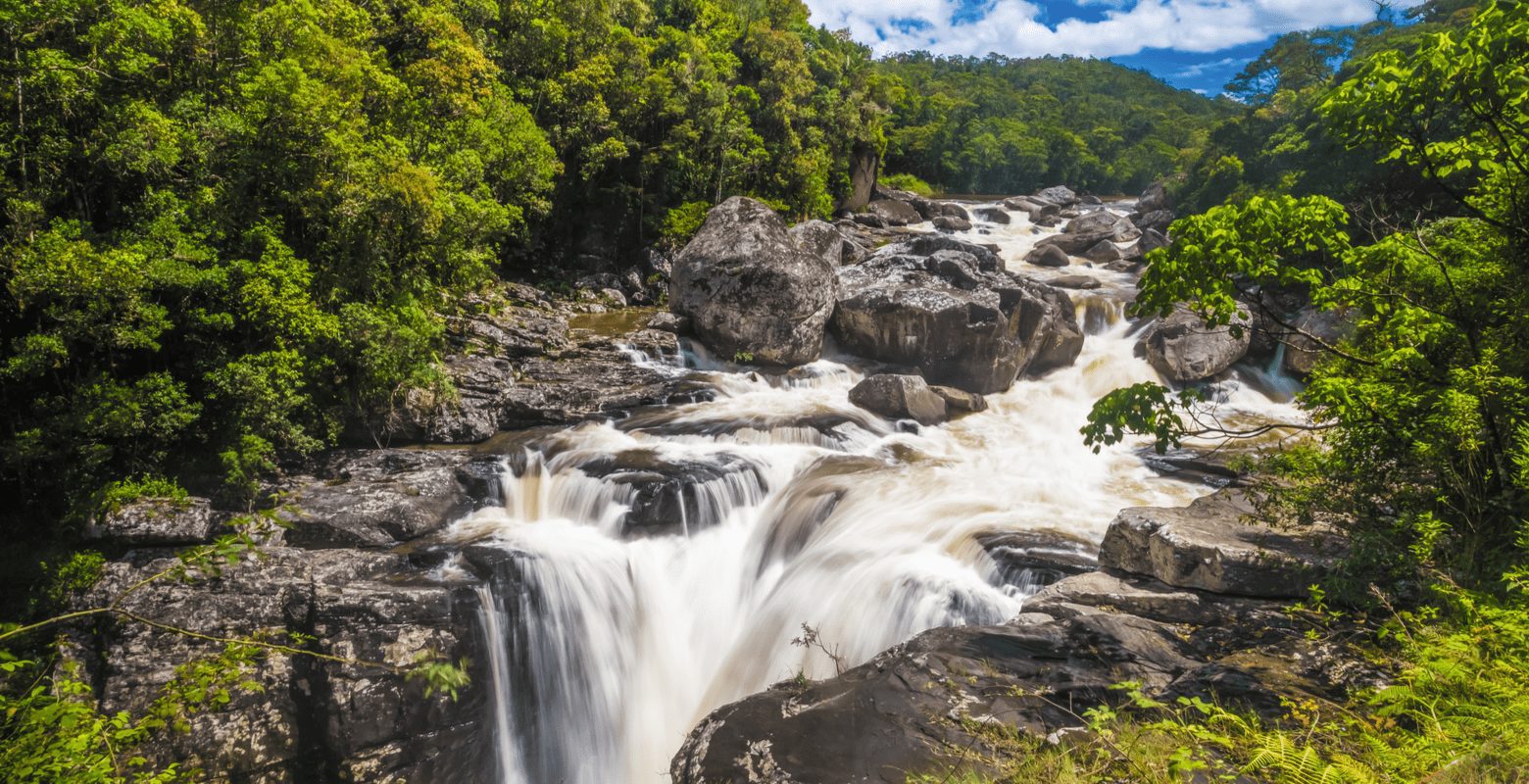
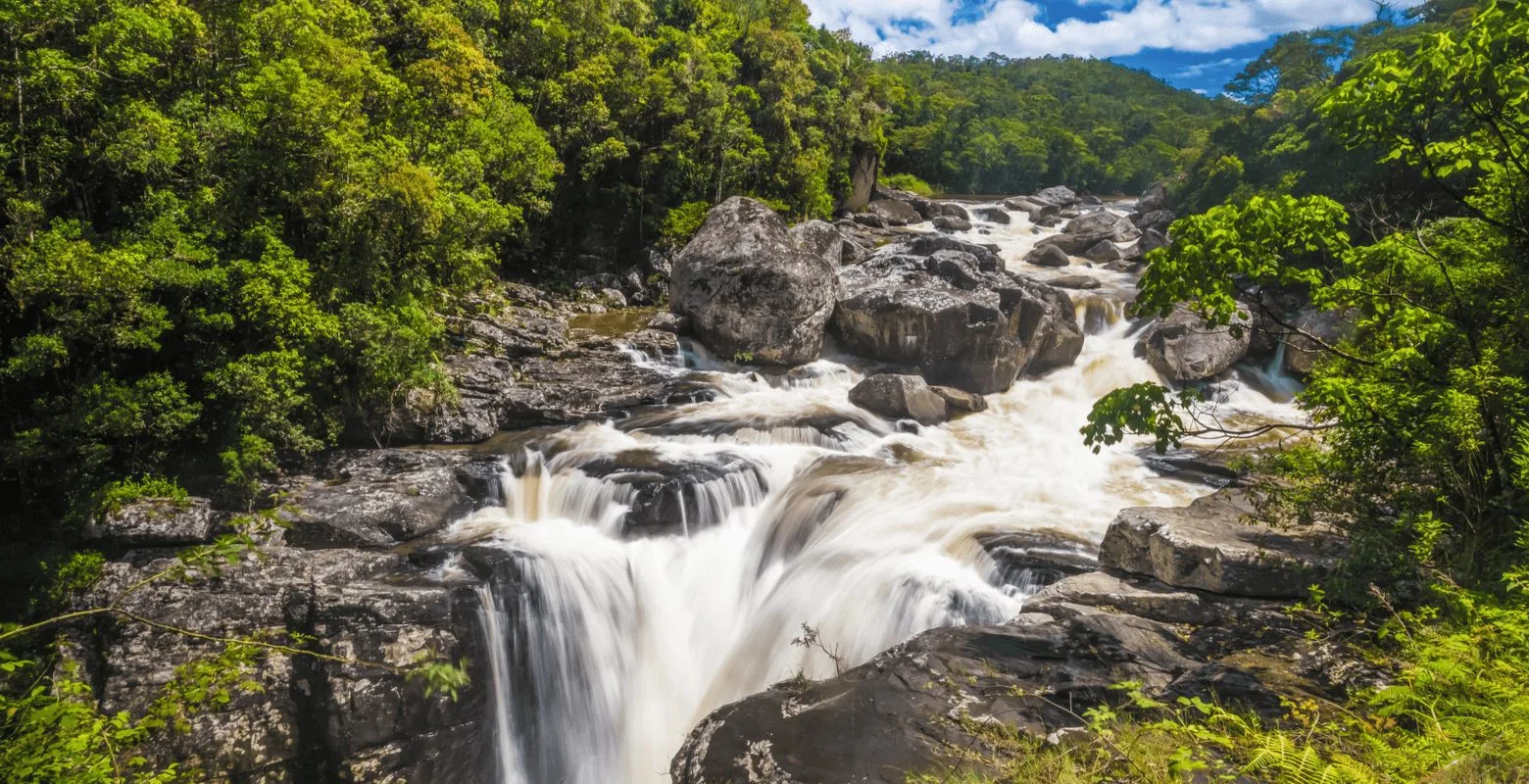
Ranomafana National Park gets its name from the hot springs on which it sits. And we think it’s one of the most beautiful parks in Madagascar. Read on to learn why.
About the Park
With easy access to highway RN7, a robust lemur species (12 in total), and updated infrastructure, it’s no surprise that Ranomafana is among the most-visited national parks in Madagascar.
Built in 1991 and designated as a UNESCO World Heritage Site, this park spans across 161 square miles of dense forests. This park is most known for being the location in which Dr. Patricia Wright discovered the Golden Bamboo Lemur. In total, there are 12 species to be found, including:
- Golden Bamboo
- Aye-Aye
- Brown Mouse
- Greater Dwarf
- Small-Toothed Sportive
- Milne-Edward’s Sifaka
- Black and White Ruffed
- Red-Fronted Brown
- Greater Bamboo
- Eastern Grey Bamboo
- Red Bellied
- Eastern Wooly
While most visitors come for the Lemurs, you’ll also see over 130 species of frogs, 30 species of birds, 8 species of bats, and 7 species of tenrecs, among others.
Expect to see native birds such as the Crested Ibis, Mesites, Velvet Asitys, Rufous-Headed Ground Rollers, and Henst’s Goshawks. Reptiles also freely roam Ranomafana park; 62 species include Snakes, Leaf-Tailed Geckos, and Chameleons.
As the park is largely a forest, you’ll see many types of fauna and flora, many used by the local Tantala and Betsileo as medicine. In addition to the plants and animals, a hike takes you by and over many streams, which feed into the Namorana River.
This is actually a major hydroelectric source of power for the city of Ranomafana and the surrounding areas. The weather is largely warm and humid year-round (it’s a rainforest, after all), but the best times to visit are April, May, September, October, and November.
January to March are typically very wet, and June to August are cooler and dry, so you’re unlikely to spot much of the wildlife. Tip: The Northeast and East parts are almost always wet, no matter the time of year.
Hikes and Trails
There are 7 different trails on which you can explore the park, but we’ll highlight the 5 most popular. if you have time, we suggest the multi-day hikes, as they are less crowded; dry season is short (as we stated above), so the day hikes tend to be fairly crowded.
- Varibolomena circuit: This hike can be easily done in about 4 hours, and isn’t too bad of a hike. Expect to see lemurs, birds, and a waterfall. Hike at night to see reptiles and frogs. We highly suggest starting in the morning.
- Sahamalaotra circuit: A slightly longer hike at 10 km, this circuit takes you through the forest on mostly flat ground. Expect to see the same wildlife as the Varibolomena circuit. Can be done in 2 hours, but will take about 4 hours at a leisurely pace.
- Vohiparara circuit: This trail takes you across the whole park, and most hikers complete in 2-3 days. 20km in total. Expect to see birds, lemurs, and reptiles (if you go at night). Fairly level, and best for bird watchers. Visitors reported seeing white-throated and yellow-browned oxyables, rufos and pitatta ground rollers, and brown emu-tail.
- Varijatsy circuit: Depending on how quickly you hike, this can be done in 1 or 2 days. At 15km total, you’ll see a waterfall, Lemurs, and birds. This circuit ends at the thermal baths and swimming pool (remember, Ranomafana is located on a hot spring).
- Soarano circuit: At 20km, this is the hardest trek, and takes 2-3 days. Most hikers stop at the Tantala villages, which is located near the trail. The largest waterfall can also be seen from the trail. Many visitors choose this trail because it’s the least busy in high season.
Getting Around
Ranomafana National Park is close to RN7, and RN25 (from Ambohimasoa) and RN45 (from Alakamisy) actually cross the park. Both roads are accessible year-round, but when it’s wet, your travel may be a little slower.
If you don’t have a car, opt to use the taxi brousse service from Antananarivo or Fianarantsoa. Entrance fees are as follows:
- Foreign Adult: 22,000 Ar per day
- Children: 25,000 Ar per day
- Extra “Community Charge”: 2,000 Ar
- Guide: Variable between 80,000 and 120,000 Ar
Keep in mind that you have to use a guide in order to visit the park. It’s not possible to enter without one. Guides help you follow the local rules and, more importantly, spot animals. And that’s what you’re there to do, right?
Finally, the park has a number of campsites throughout the park along with a simple “gite” nearby the park office with access to warm water and showers.
The cost is approximately 8,000 Ar per use. If you don’t want to rough it, there are more comfortable accommodations available in the nearby villages.